In early 2025 a lead came knocking on our door looking for Flutter devs to develop an MVP. Everything went great until we talked cash: we quoted waaay over their expectations. 4x over, to be specific.
This was our first time dealing with the impact of vibe-coding and the now well-known «I can do it cheaper with AI.»
Our overpricing wasn’t because we offered something more luxurious or special. We were simply working with a traditional model, whereas entrepreneurs had started to move on to AI-driven development MVPs.
As we pondered how to leverage AI to be more price competitive, AI continued to improve, assisted development workflows improved, and the transition became a must.
This year we officially introduced «AI-Powered MVPs» as part of our core offering.
First step: letting go of T&M
The first shock was giving up the typical Time & Materials model. AI-Powered MVPs are fixed-price, the nemesis of all agencies.
But with the available tools, most true MVPs are doable on a fixed price/scope, and as an agency, it helps us stay competitive. Not only can we move faster, but we can do so with a lighter, more dynamic team.
Two things make that survivable:
The first is knowing where the concept stops applying. Past 25k we stop treating the project as an MVP. We still take the work; we just catalog it as something else, because past that number, what’s being asked for has usually stopped being an MVP and nobody is served pretending otherwise.
The second is who carries the risk. If a project goes over the fixed price, we absorb it. It was our estimate, so it was our mistake. Since we introduced the method, we haven’t gone over on one.
Second step: understanding true gains
The second shock: faster, but how much?
With «AI-Powered» development, it’s tempting to go to the extremes and say times are cut in half, or doubled, because «it needs more testing.»
How much faster isn’t a question the research answers clearly. What’s been studied carefully are mature codebases, close to the opposite of a greenfield MVP. So rather than borrow a number, we watched our own team.
Three patterns showed up, and they have less to do with AI than with how each person uses it:
- Using AI as an autocomplete: Productivity barely moves.
- Going full vibe-coder: Much faster, but context blind about whatever was just built. The cost never shows up while the code is being written, it shows up in the next requirements convo. We ask for a rough estimate on a change, a new feature, or a bug that turned up. There’s no answer. Not because the work is hard, but because they don’t recall how the thing was built in the first place. Speed you can’t estimate against isn’t speed.
- Using AI atomically: Specific features, paired with vertical slices. Faster, and the context stays in the brain.
The last one is how we’ve decided to work for our AI-Powered MVPs. We got there through trial and error. No internal study, no rigorous testing; just what kept feeling best day to day.
That’s also the pillar this whole thing rests on. Quality talent augmented by AI, rather than vibe-coding, is what makes a fixed price quotable in the first place. You cannot commit to a number for work nobody on the team will be able to explain next month.
Would the new offering have converted the lead from early 2025? I can’t read minds. But we’d have been in the conversation instead of 4x outside it.
What kept bugging me
That still wasn’t enough. The thought of «what else?» continued to pop up, and personally, the word «leverage» continued to bug me.
How can we increase leverage in our method?
We continued to tinker and think deeply about our unique value proposition. AI had become a key participant in our daily work, our business continued to be great at taking juniors and elevating them to seasoned proven talent, our offering was more competitive, and we have our own product ecosystem focused on logistics/supply-chain.
And that’s how we landed on The Leverage Method. A 5 pillar method that focuses on extracting as much as possible from our inputs.
Since its inception, we’ve lowered our median MVP ticket size 3x, with a third going for under 10k. Median time-to-market went down 2x.
For our retainer clients, where we already have deep business knowledge, the numbers are even better:
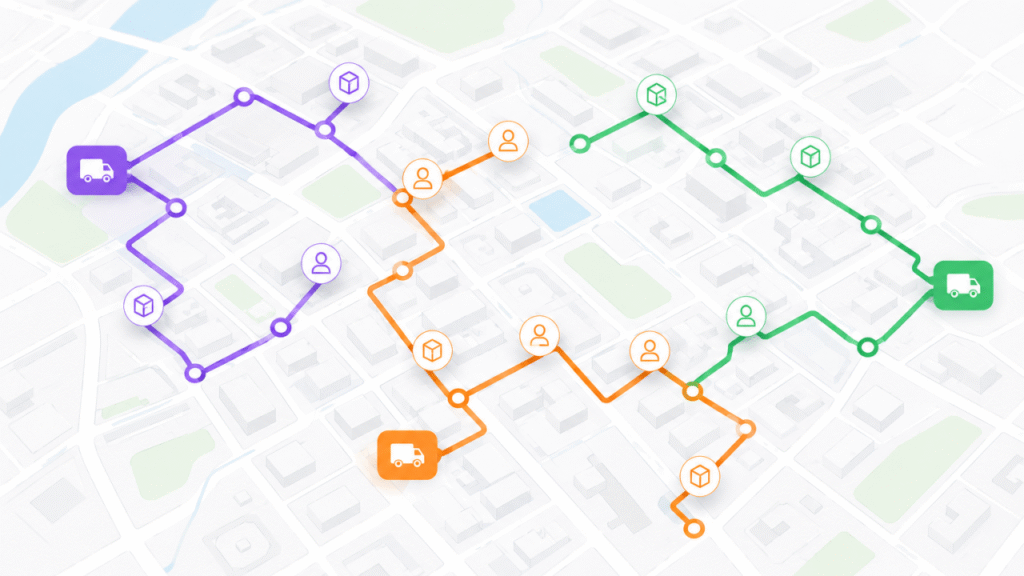
- A full delivery + picking routing system + shift management: 2 months, 1 dev.
- Samsung Health integration from scratch: 2 weeks, 1 dev.
- Rip and Replace migration for an e-commerce integrations hub: 1 month, 1 dev.
In the future, I’ll write more in detail about The Leverage Method and all the other pillars it has. But this one, focused on AI-Powered development, we can already put numbers against.
Over the past few months, we’ve been working on internal resources that answer a few questions related to this topic:
- Can I build my MVP in 4 weeks?
- The 5 prompts needed to build an MVP from scratch
We haven’t posted these publicly yet, but if you’d like to get a sneak peek, hit me up and I’ll happily share both.
Originally posted at: https://www.linkedin.com/pulse/client-right-could-do-cheaper-ai-mauricio-guzman-muletaber-wbg8f