
For months, you’ve been thinking about how to transform your company. How to improve your numbers. Reduce churn. Increase revenue.
And you just came up with a perfect solution…
«A new software solution that streamlines your operations and elevates customer experience.»
«It’s simple really» you may be tempted to think to yourself.
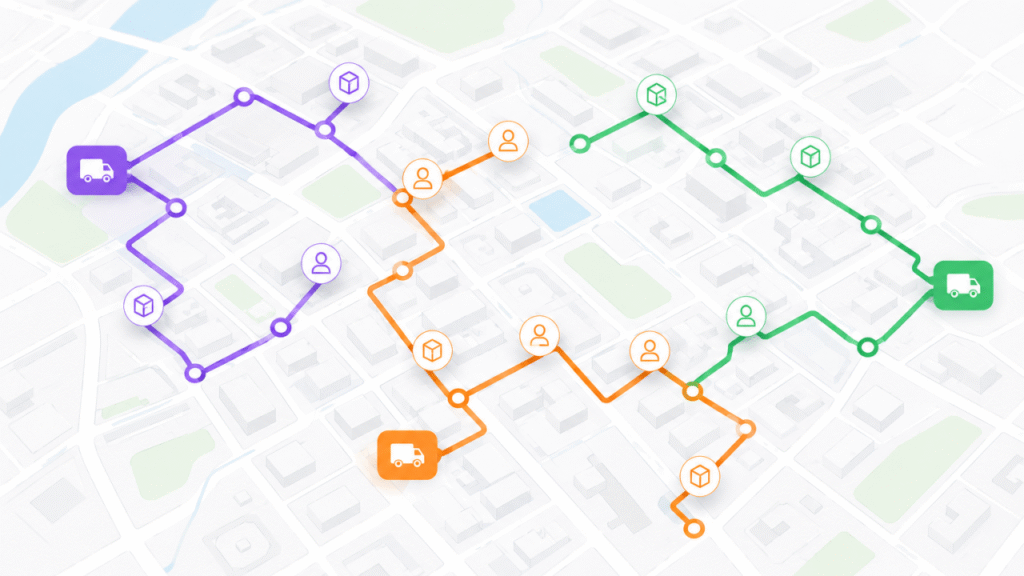
«We just need to come up with a new panel, one for admins, one for clients. Everyone can keep track of our fleet and deliveries from there.»
And you may as well be right about the simplicity of the solution.
Heck, you may even be right about the positive impact this new panel could bring to your business.
But creating it is just the beginning.
Now your people have to start using it. Enforcing it. Day after day.
But they don’t.
After investing tens of thousands of dollars, the biggest roadblock wasn’t creating the software; it was adoption.
Collaborators who have been doing the same processes manually for decades now refuse to adapt.
And what used to be a very clear value proposition in your mind is now floating in limbo.
Some use it. Some don’t.
The ones that do use it, half don’t input the data the way they should.
The tech team is drowning in support tickets that aren’t really bugs. They are simply misunderstandings because no one cared to put some thought into it before inputting data.
If none of this sounds familiar, I congratulate you! But let me tell you that this is more common than you might think.
In fact, today’s article is inspired by our own work with one of our clients. It stems from a harsh realization: no matter how hard we worked or how good the software we developed was, it wouldn’t matter unless our client’s people were on the same page about championing the new platform.
I won’t go into detail about how the software was created, how the digital transformation needs were identified, or how AI might assist this work.
In this piece, I want to focus on the role of champions when transforming your business.
What a champion is, to us
They are the people who see past their comfort zone and get on board with trying out something new.
To be clear, those who do the opposite aren’t inherently evil. Some are probably comfortable and not willing to change unless forced into motion. Others may fear that this new technology will take their job.
They also don’t gatekeep processes, and they care about the quality of their work.
Whatever the case, good or bad, it can pose a huge roadblock to digital transformation & adoption for any business.
So whenever you embark on a big new project that will take your company to the next level, ask yourself who lands where. Try to convey the importance of the project early on, aiming to increase the number of champions.
Our harsh realization
A few years ago, we began working with a new account in the transportation industry. A huge name in the space, we were thrilled.
After decades of operating with good ol’ pen & paper + some Excel sheets, they wanted to migrate their fleet tracking to software.
We analyzed their needs and existing processes, interviewed their relevant workforce, assembled a team, and got to work.
Like with any project, it went great up until we had to integrate with internal 3rd party systems.
Multiple systems, outdated, just one dev juggling everything. Typical integration struggles really.
But that got done, and the project continued.
Eventually, we reached the point of launching to prod and opening it to a subset of select workforce members to begin real-life testing.
And this was where it all started to crumble.
– The managers were excited and helped massively with testing. The operators didn’t.
– The managers, despite their excitement, didn’t push operators to use the software.
– Hence, the software didn’t receive enough input to actually validate it properly.
– We were stuck because we didn’t have enough to call it finished, so we pushed the managers.
– The managers pushed the operators, but didn’t actively monitor or help them. The operators used the software inconsistently, and when they did, they often entered incorrect data or had unrealistic expectations.
– The managers didn’t validate any of the reports. Therefore, we received dozens of support tickets with no context.
– We would push back, explaining the mismatch in expectations or data input.
And the cycle would start all over again.
We spent an embarrassing amount of time repeating this cycle. And the production phase took way longer than the actual development.
Up to that point, we hadn’t faced something similar. Usually, when a client reached out to us, they would be on top of things and help ensure the software actually added value.
But this triad of failures (us included) led to the project running out of budget, forcing us to work for free and delaying the full production release by several months.
Hundreds of thousands of dollars stuck because of it.
Pushing the managers was the only lever we had, so we kept pushing it.
None of this is new, as it turns out. After doing some research I found this dates back to the nineties.
Kotter separates sponsorship from change leadership.
A sponsor puts their name on the initiative, funds it, and watches over it.
Change leadership is the unglamorous daily part, getting people to actually do the new thing. And that’s the bulk of what decides whether a transformation survives.
The managers had the first one covered. They were excited, they helped massively with testing.
The second one was never anyone’s job.
So that’s what we meant by a champion.
Not the person who approves the project, but the person who keeps it alive after it ships.
The polar opposite
Close in time, we onboarded a new account working in last-mile delivery. And they proved to be the polar opposite.
The managers were hands-on and always ready to help. The operators too.
We would visit their warehouse to watch them work live, ask questions, provide new functionalities to test, and troubleshoot together. If any support ticket came in half-empty, we would give them feedback, and they would automatically add it to their SOPs for interacting with us.
A true joy to work with. And the project timeline reflected it.
And in a short span of time, we experienced both sides of the spectrum.
Today, when onboarding new clients looking to kickstart their digital transformation, we always ask if they have people ready to champion their transition.
When hearing it, people tend to have funny reactions, such as «Why are you questioning us if we are the ones paying?»
But when we explain why, they get it.
They understand what they need to do. Not for us, but for themselves, for the sake of the project.
How to champion your transformation
If you’re looking into or already in a digital transformation, this would be a great time to look at your team and ask who’s championing it.
Note that the bigger your company grows, the more likely this issue is present in your organization.
If no one’s doing it, I’d highly recommend talking with your people and picking at least 2 or 3 to ensure proper usage and validation.
If only managers are championing it, keep an eye on how they extend their excitement to the rest of the team. As we saw above, that isn’t championing, it’s sponsorship.
And last but not least, if your tech team (even when outsourced) isn’t championing it, that’s a problem too. As the main drivers of the transformation, they should be championing it too by asking questions, pushing for more, and raising the flag when things aren’t going well.
When embarking on a digital transformation, we are all responsible for its success. This means not just developing the software, but ensuring it survives the test of time and the company gets its investment back.
And for that, you need champions.
Identify them. Celebrate them. They are the people helping the most when taking your ideas into actual results.
What about you…
Has your business gone through a massive digital transformation and lacked champions?
Originally posted at: https://www.linkedin.com/pulse/transformation-worked-company-didnt-mauricio-guzman-muletaber-dkx0f